
-
Idiazabal, much more than a cheese.
Juan Manuel Garmendia. Vice-president for Gipuzkoa of the Basque Academy of Gastronomy and President of FECOGA.
Our shepherds have perpetuated the practice of shepherding following the old routes determined by the seasons (high pastures in spring, summer and autumn; valleys during the winter). In addition, they have taken advantage of a natural food which follows an unchanging cycle.
The fruits of this centuries-old tradition are:
1.- A rustic sheep of the Latxa and/or Karrantzana breed, perfectly adapted to the environment, hardy, good grazer of pastures, produces high-quality milk.
2.- A natural environment, shaped by this seasonal rotation that has determined the current landscape of the high pastures located in the Gorbea, Aralar and Urbasa mountain ranges, as well as our mountains and valleys.
3.-A cheese that in the past was given the same name as the mountain range in which it was made. Now we call it Idiazabal because this unique cheese is identical in all the mountain ranges.

Idiazabal cheese is made exclusively from raw milk from Latxa and/or Karrantzana sheep (minimum curing period of 2 months), enzymatic coagulation, uncooked (not exceeding 38º), pressed, hard cheese (esmoked or unsmoked).
The sensory definition of IDIAZABAL CHEESE is obtained through the 8 parameters defined by the Tasting Committee of the Regulatory Council of the Protected Designation of Origin Idiazabal (C.R.D.O.P.I.): shape, rind, colour of the cheese, eyes, smell, texture, flavour and persistence. By knowing and differentiating them, we will be able to appreciate the characteristics of the cheese.
Its final flavour tends to be intense, but no less balanced, persistent in the mouth like few others. Its salinity is medium (neither too high nor too low). It has a spicy tone that is perceived at the end, and the expert cheese taster will notice the character of matured sheep’s milk and natural rennet.
By consuming such an exquisite delicacy, we are contributing to the livelihood of an ever-growing group of shepherds, who in turn are the guardians of the conservation of our natural areas. “Research shows that herds grazing on mountain pastures can produce high quality, healthy food*”. The Idiazabal Cheese Guild of Ordizia is its best ambassador.
(www.quesoidiazabal.eus).
* Luis Javier Rodríguez Barrón, lecturer at the EHU/UPV.
Foto: Jokin Elizalde (Member of the Idiazabal Cheese Guild of Ordizia)
made
-
Going out for pintxos in San Sebastián
San Sebastian is world-renowned as a perfect gastronomic destination. This reputation has been built very slowly and thanks to the hard work of its different proponents. Locals and visitors have the chance to enjoy a wide and diverse selection that can satisfy all kinds of foodies.
One of the most rewarding experiences is to go out for pintxos in San Sebastian, visiting the different districts (barrios), even if the most renowned are located in the Old Town.
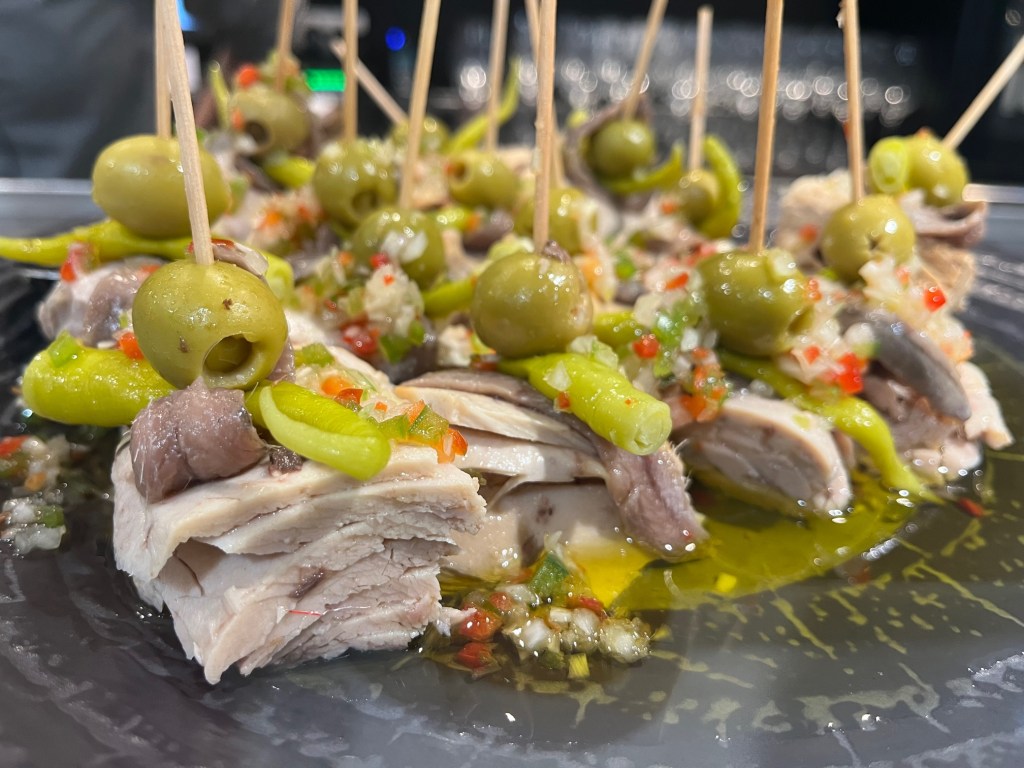
A “pintxo” or “brochette” (banderilla, in Spanish) is defined by a balanced combination of flavours and aesthetics. Several titbits of food, either on a slice of bread, on a brochette or in some other presentation, can be sampled in two or three mouthfuls. It is normally picked up with your fingers. The brochette is a more traditional concept.
All donostiarras, (locals from San Sebastian, in their Basque name), have our own pintxos crawl. When we visit our local bars, or the Old Town, we know exactly which bars to visit and which pintxo to order in each one. Our choice depends on what the bars have on offer and on our taste. Even if locals agree on the top five bars, it is easy for you to make your own pintxos crawl, you only need to visit the guide published by the “Instituto del Pintxo de San Sebastian” (Institute of the San Sebastian pintxo), click on (English version available):
https://www.institutodelpintxodess.com/en/instituto-del-pintxo

The Institute was created in December 2018 to preserve our pintxo tradition, beginning with our traditional way of going for pintxos. We eat one or two pintxos in each bar and carry on in the bar crawl. We enjoy pintxos before lunch or dinner or as a substitute for them.
The Institute has defined the ten-steps that define the perfect pintxo and our traditional way of going for pintxos. The ten-steps are:
1.- Just the right size and maximum flavour
2.- Homemade
3.- Cutting-edge
4.- Has personality
5.- Freshly made
6.- Commitment to the product
7.- Professional service
8.- Clear and visible information (ingredients + price)
9.- Eaten in typical San Sebastián fashion: at the bar
10.- Something to enjoy in a group.

For more information you can visit the web site of the Institute of the San Sebastian pintxo, click here: https://www.institutodelpintxodess.com/en/instituto-del-pintxo
Enjoy our city eating some good pintxos.
-
Member of Gaztelubide, a real honour
Believe it or not, the four years have passed quickly since the day I was made a member of Gaztelubide. On 14th of December 2018, as every year, after a good dinner, we proceeded to the prize-giving ceremony of the mus championship (a card game) and the presentation of badges to the new members. As I said to Joserra Mendizabal, President of the Society, I felt touched & blessed by the finger of God.
All societies are based on two important principles. Trust is the first one (all members have the key of the society) and generosity (new members also become co-owners).
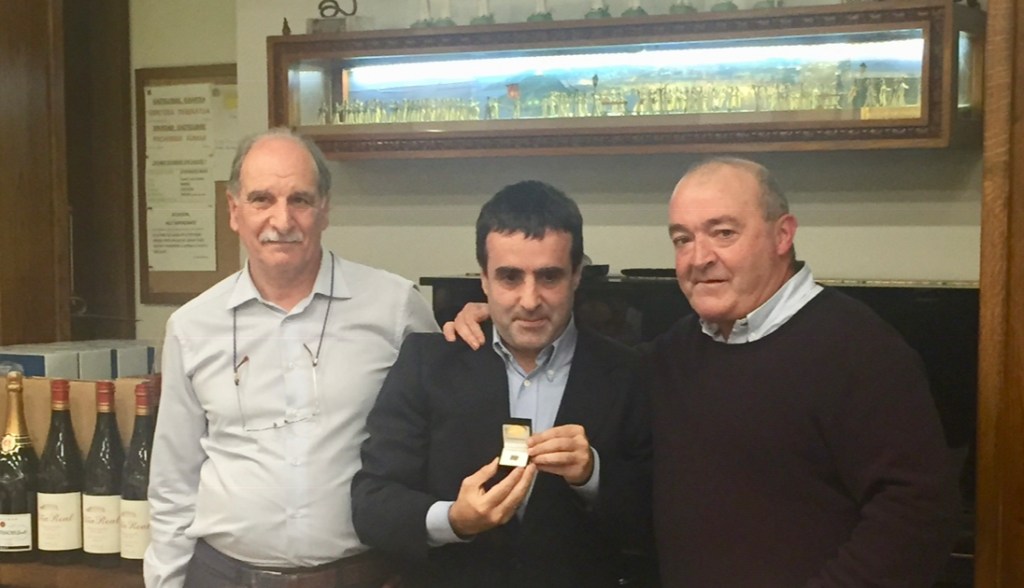
In these four years things have not been easy because of Covid-19, but we have had extraordinary occasions to enjoy a rich coexistence.
Daily, weekly life and routine are the characteristics that most “enrich” social life. To enjoy it, you have to come to the Society frequently and have all the other members as friends. In addition to the friends and relatives we have outside, these are also our friends.
I have often organised lunches or dinners for friends or family, but I have also often taken part in activities organised by the Society. The latter are essential to form bonds with people.
The “cuadrillas”, group of friends, in the Society each have different habits. Goyo’s “cuadrilla” meets every Tuesday for lunch. Goyo prepares the food and they eat in a really special ambience. On Fridays, Joserra Mendizabal’s cuadrilla has dinner. In my case, I take part in the Saturday brunches. José Antonio Calvo does the shopping, Fernando San Martín prepares the “hamarretako”, brunch, and the rest of us (Ángel Soroa, Julián Serrano, Sergio Dean and myself) eat to our heart’s content, accompanied by several bottles of cider. Vicente Odriozola, Javier Arbizu, “El Purri”, and Mariano Torres also join us from time to time to enjoy the brunch. Although what we eat is important, what is more important is what we share in the gathering.
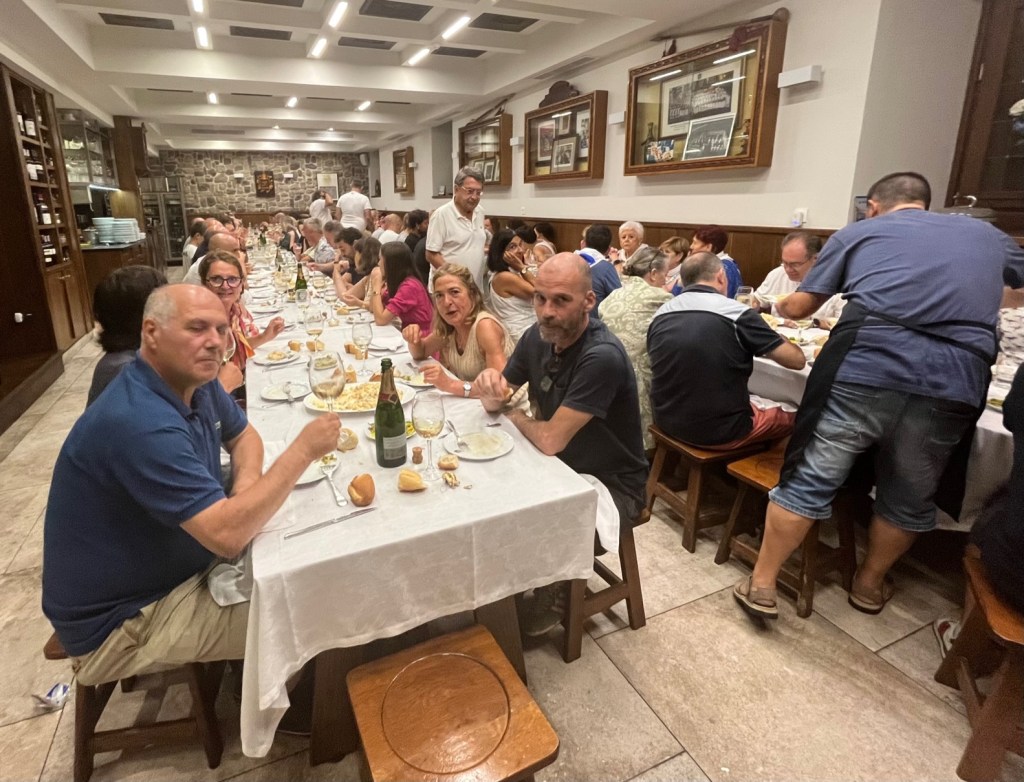
When we cook, we are all apprentices and we are all masters. We support each other and come up with ideas to make the food we are preparing better and more delicious.
Every year the Society organises lunches and dinners for its members, often with the joyful participation of the “Orfeón de la castaña”(our Choir). Many members of the choir are also part of Gaztelubide and spread its good name wherever they go. On 21 December 2023 the Orfeón de la Castaña celebrates its first centenary. We will have to prepare something special for then.
On the eve of San Sebastian (most important holiday in San Sebastián), our tamborrada (special march) opens the festivities in the Constitution Square. A dinner at Carnival in which the members of our fanfarre will be the entertainers and then stroll through the Old Town; on the eve of Saint John, a dinner to taste the ciders we have in the society; the dinner on the eve of the Virgin of August, in which the Orfeón de la Castaña sings the “Festara”; the txistorra and the read beans on the day of Saint Thomas. As you can see, the members of Gaztelubide make the most of every opportunity the year offers to have fun. Gora Gaztelubide!!!!
-
Guild members & co-producers

The many entities (gastronomic societies*, produce guilds**, among others) that have been working in Basque Gastronomy for years have promoted objectives similar to those of Slow Food, an association created in 1989. The growth and influence that the Slow Food philosophy has achieved in just a few years is surprising. What has facilitated this success?
The message of this movement has been clearly communicated by Slow Food leaders, through clear and powerful slogans. One example is “good, clean and fair”. It explains in three words what food should be like.
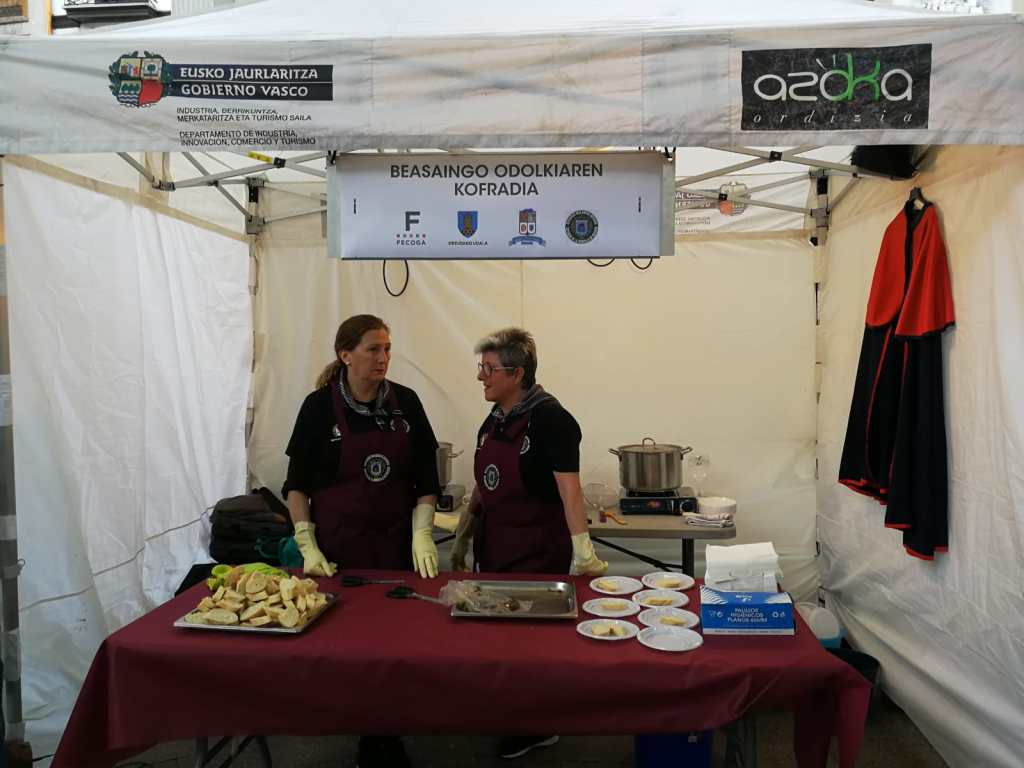
Good: appetizing when we eat it.
Clean: healthy (hormone-free, non-GMO, chemical-free,…).
Fair: the prices we consumers pay must guarantee the quality of life of the producers.
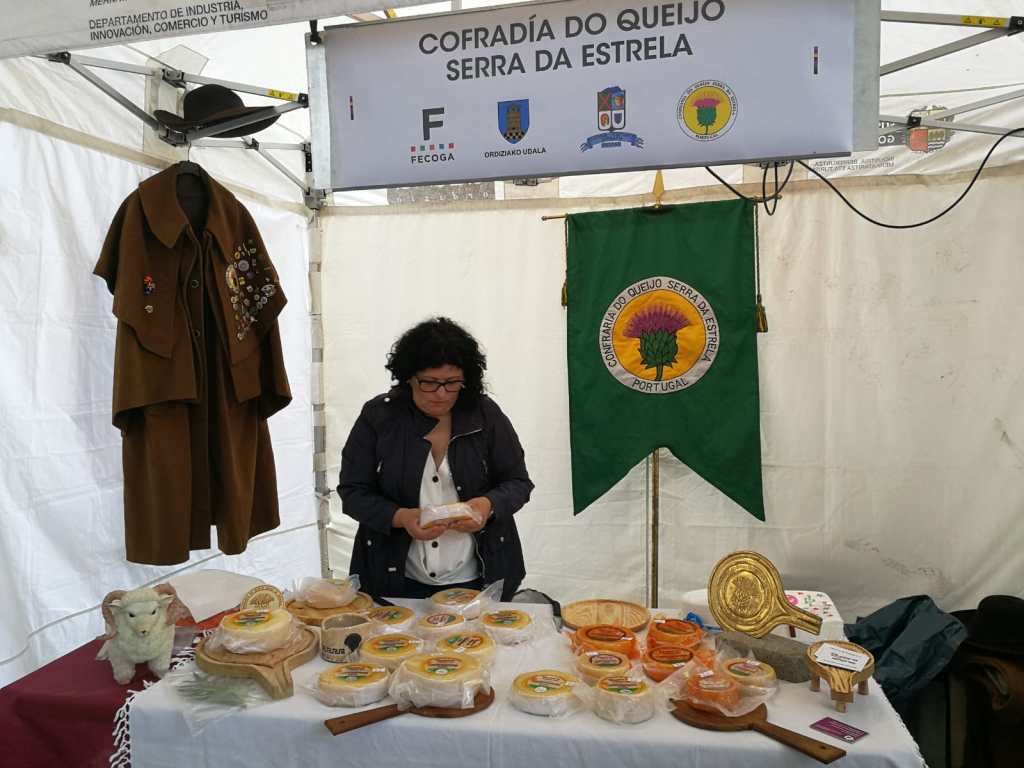
For centuries, pleasure has been a sin for Christians. The Slow Food movement has turned pleasure into the engine that the slow revolution offers us. They have turned well-oriented gastronomic pleasure into the best ally of the primary sector. Slow Food confronts Fast Food, they are enemies. The first favours diversity, the second bland homogeneity.
The land we have around the world should not be managed as a factory. Short-term profits should not condition global agriculture and livestock farming. We must look after local varieties. There are countless varieties of potato, tomato, grape, rice… In the territories where the varieties have been generated, they are better adapted, they need less fertilisers and pesticides. Let us preserve the wealth offered by this diversity. The challenges and risks of the future will be easier to face if we have many varieties.
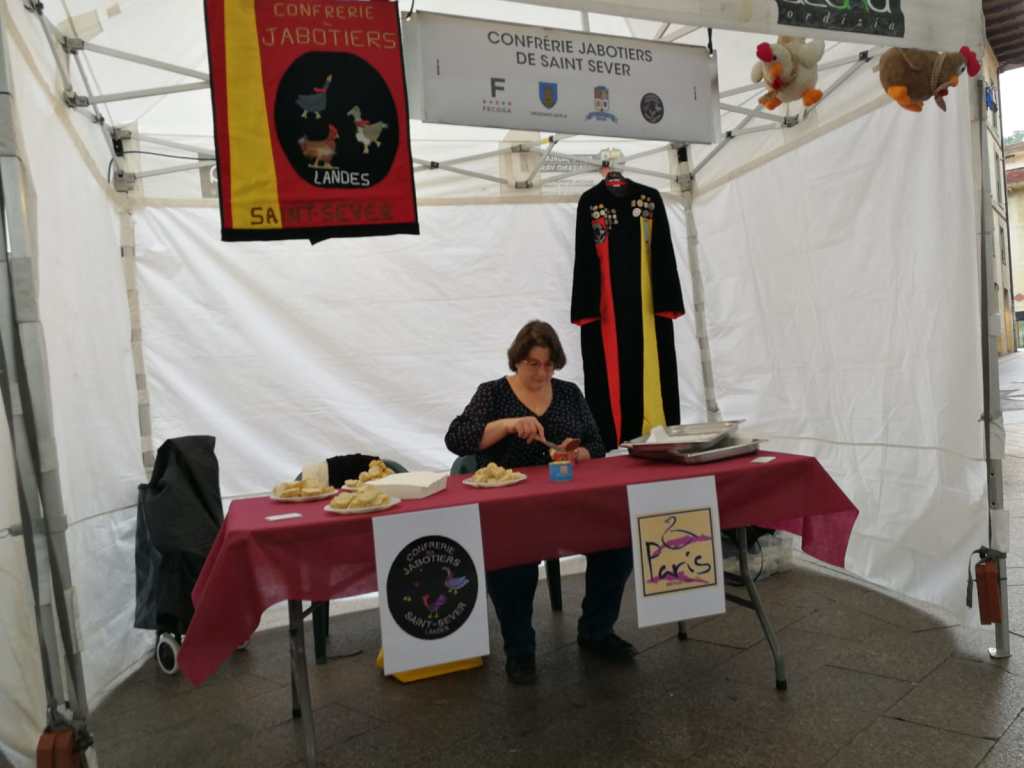
Particularly interesting is the concept of co-producer coined by Slow Food. Although the term was not invented by Slow Food, it has brought to light an interesting consumer profile that has always existed.
Normal consumers only buy and pay for the product. They are not interested in its history, its production; they buy, pay and that’s it. The co-producer, on the other hand, goes further: he/she knows the product community in depth (another Slow Food definition). The product community is made up of the product itself, the producers, the restaurants, the shops, the fairs, the writers, the co-producers; agents that revolve around each product.
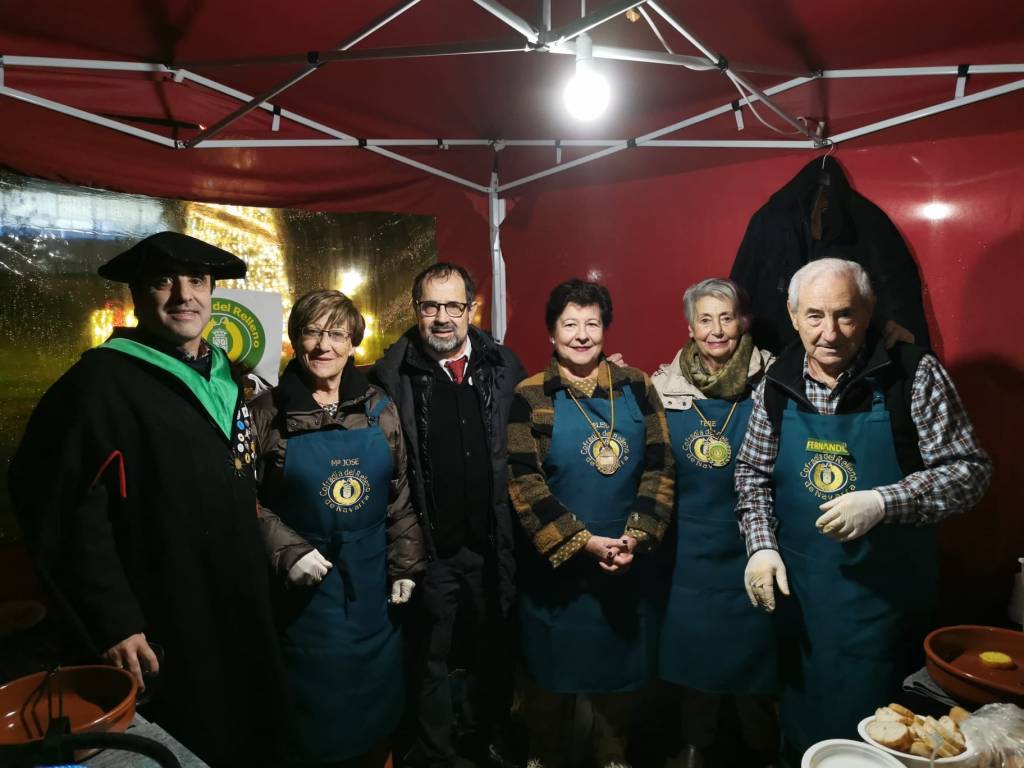
Restaurants are the special co-producers for the Slow Food movement. Supplying the kitchens from our own and nearby farms. A few years ago, the restaurants formed a group with the title KM-0, today they are collected under the name of Cooks Alliance.
The guilds and FECOGA (Spanish acronym for the Federation of Gastronomic Guilds) members are extraordinary co-producers. They know perfectly well the characteristics of the products they defend and praise the work of the producers.
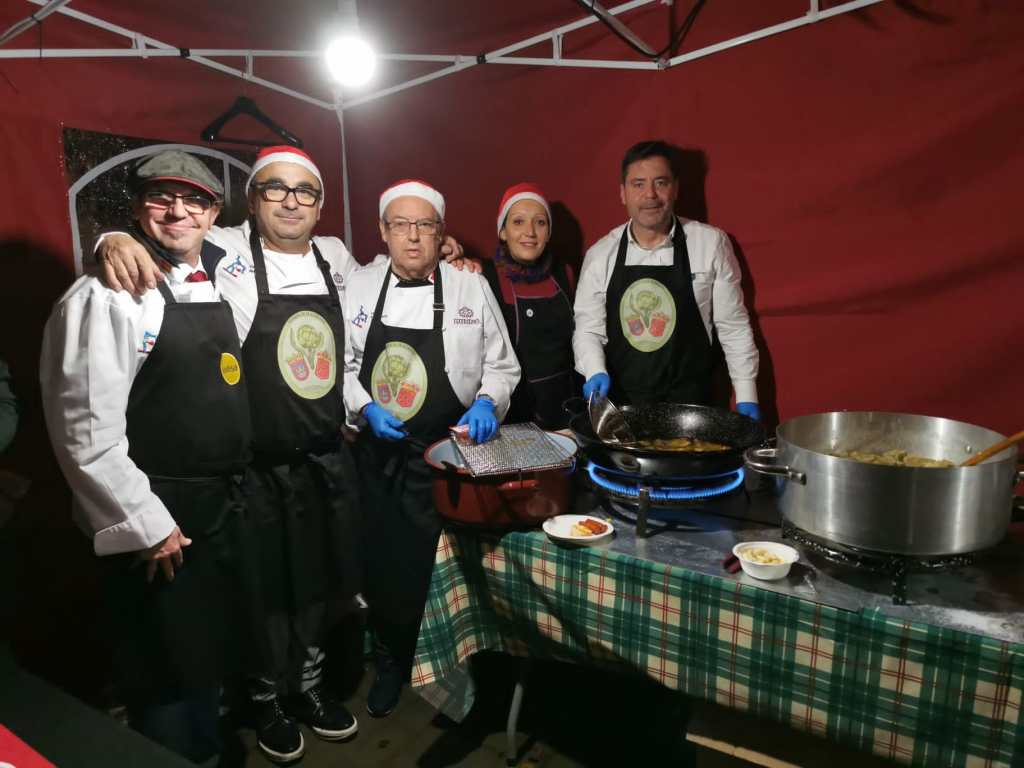
For example, the members of the cheese guilds have a profound understanding of all the specifications of the process: what type of milk is used, how it is made and seasoned, how it should be tasted. The same is true of the guilds that promote wines, vegetables and other products.

The work of our guilds is enriching. The celebration of the chapters (the guild’s feast day) is important, but the community’s defence of its own produce is even more important. Let us therefore be extraordinary co-producers.
One of the main challenges facing the guilds today is generational renewal. In order to attract the next generations, they must perceive that guilds are beneficial to society and that the life of the association also enriches its members.
Let’s see if we are lucky enough and it happens!
Notes:
*Gastronomic societies are social clubs where members meet to cook, eat and share a day of leisure. They are private and only their members have access to them, although friends and relatives may accompany them. There are no owners as such; the members prepare all the meals and services, which are then enjoyed and shared by all. It is a Basque tradition that is an important part of the culinary culture of the Basque Country, but it is also deeply rooted in Navarre and La Rioja.
** A Produce Guild is an association of people, with different backgrounds and training, who work voluntarily to promote and protect a product and a town or region.

-
I eat everything that flies, except planes

With a finger in many pies, one of the best known faces in gastronomy is Juan Manuel Garmendia. He is the President of FECOGA (Federation of Gastronomic Guilds), an association that transcends borders, although he is also a member of other important culinary associations such as the prestigious Basque Academy of Gastronomy or more ethereal bodies such as the “Pintxo Institute”. Our protagonist considers himself to be a “militant Beasaindarra from the ’66 vintage, a happy child of the mid-60s”. Educated at the La Salle school in Beasain, he completed his studies at ESTE (DEUSTO business school in San Sebastian). From 1990 to 2004 he worked in the commercial department of AMPO, S.COOP and since then on the Board of Directors of Jaso.
Honorary Member of eleven gastronomic guilds which he coordinates, he is particularly “honoured” to have been involved in the branding of an Asturcón horse in the Sueves mountain range in Asturias, at the request of ACAS (Association for the conservation of the Asturcon horses of Sueve).
– Apart from computing and gastronomy, what are your hobbies?
I dedicate time and affection to preserving and improving the four languages I speak: Basque, Spanish, French and English.
As I am very gregarious in all aspects of my life, I love choral music and I sing in the Easo Veterans Choir and in the “Orfeón de la Castaña” of Gaztelubide (a gastronomic society).
– Your favourite place in Donostia?
I have many places that I love, but I would highlight Urgull mountain: for its history, for its incredible views of Euskal Herria on both sides of the muga (border), of the coast; for having been the playground of many generations of Donostiarras (natives of Donostia), … It is very close to the centre, but in a few minutes it takes you away from the hustle and bustle of the city.
– And in Gipuzkoa?
As a good Beasaindarra (native of Beasain), I would choose Usurbe and its 703 metres (views of the Aralar and Aitzgorri mountain ranges and the villages of Goierri).
– And in the rest of the Basque Country?
San Juan de Gaztelugatxe, because of the abruptness of this part of the Biscayan coast.
– And in the rest of the world?
The Colorado Canyon, an ideal place to enjoy the grandeur of nature, the fruit of the constant work of the Colorado River and our “insignificance” as human beings.
– What has been your best trip?
I would say two. A three-week trip I did with my parents in 2002, touring Canada from coast to coast. The second, the one my partner and I did, between December 2017 and January 2018, to Australia and New Zealand.
– And the trip you still have to do?
Fortunately there are many more to do and we are still young (although not that young anymore). A river cruise on the Rhine or a sea cruise in the Norwegian fjords, Peru, southern Italy, …
– What do you value most in a person?
The perfect combination of sincerity, proximity and generosity.
– And what do you hate?
The ability of some lazy people to appropriate other people’s work and sell/show it as their own.
– Where have you had your best gastronomic experience?
I’ll mention two experiences that are at polar opposites of each other; the first, a trip with the International Academy of Gastronomy to Baiersbroon, a town in the German Black Forest with 15,826 inhabitants, full of 3, 2 and one Michelin star restaurants, and the second, a visit with lunch, accompanying the Idiazabal Cheese Guild of Ordizia, to the “borda” (=hut) that Ricardo Remiro has in Urbasa.
– What is the product or gastronomic custom that you value most in the Basque Country?
I have enjoyed our cider since I was very young. Fortunately we can say that it has evolved a lot: in production, in formats, … For me, cider goes perfectly with almost all dishes, and it is also a good long drink.
As a custom, I value the social life of gastronomic societies and their relationship with their settings.
– And the product or custom that has surprised you the most outside of here?
Thanks to my friends from the “Cofradía Gastronómica del Cocido con pelotas” (The Gastronomic Guild of Stew with Balls), I was introduced to mojama, a salted fish made with tuna steaks and also with the meat of different fish such as mullet, bonito, sardines, anchovies and other lesser-known fish such as ling or sea bass. Possibly one of the oldest specialities on the Iberian Peninsula.
– What is your favourite dish to eat?
As a starter, a Donostian-style fish soup; as a main course, hake in green sauce and for dessert, some cheese.
– And your favourite dish to prepare?
When I cook for friends, I love to prepare a garbure, following a recipe by Juan José Lapitz. It’s a dish from the southwest of France, not very well known in our country. As a good casserole for the gastronomic society , it is prepared before the guests arrive, so that the cook enjoys the meal with everyone. As the recipe includes vegetables and duck meat, it is ideal as a main course.
– Is there any dish or product that you are reluctant to eat or prepare?
I could say that I’ll try anything, although I have my own preferences. I eat everything that flies, except planes; and everything that has four legs, except tables and chairs.
As to cooking, I recognise my limitations in baking, as it requires precision in quantities, temperatures and times. Besides, as a foodie, I am more of a first and second course kind of person.
– Suggest two restaurants in Donostia and two in Gipuzkoa.
It’s hard to have to limit yourself to just two restaurants, with the very rich offer we have in Gipuzkoa. I would choose the Zuberoa of the Arbelaitz brothers, for its perfect balance between modernity and tradition. They have a service that makes you feel at home. And also the Landa from Mendaro. As for Donostia, I would highlight Sukaldean, Aratz… and many more.
– And two others in the Basque Country or in the rest of the world?
I loved the restaurant “Chez Kathy”. Located in Ciboure, half an hour from Donostia, its speciality is Ttoro (a hearty soup made with different fish from the coast of Labrador). Frankly speaking, it’s a great dish and justifies the trip. It is surprising that Ttoro is so unknown south of the Bidasoa.
I’d also mention Atelier Amaro by chef Wojciech Modest. I visited it in September 2015, during a trip with the Basque Academy of Gastronomy to Poland, at the invitation of the Polish Academy of Gastronomy.
This restaurant, located in Warsaw, had one Michelin star at the time. It was the only one of the Slow Food movement in Poland that is located in the capital (this association had two restaurants in the country at the time).
If we arrived with high expectations, what we experienced at dinner was certainly unique for the richness of the menu we enjoyed (long, narrow and very diverse), surprising for the combination of flavours, entirely based on Polish products and recipes, but offered with an updated vision. A perfect modern Slow Food restaurant.
– A chef who has surprised you?
Martín Berasategui, in addition to the quality of his cuisine, I can confirm from a couple of events that my family has organised in his restaurant in Lasarte, that he has shown me with facts that he prioritises customer satisfaction over short-term profit. He is a man of his word.
– Goierritarra by birth… What should we not miss if we go from Tolosa downwards?
The monuments of Igartza, Aralar, Aitzgorri, the markets (Tolosa, Ordiza, Beasain, …), the old town of Segura, … a lot to see and many occasions to enjoy.
– COVID-19… How have you experienced it?
With resignation, but always focused on doing everything that was possible to do at all times, looking to the future with hope.
From the Board of Directors of FECOGA, we suggested to our member guilds that they take advantage of this fallow time to grow internally, to “put the house in order”. During this time I have promoted the translation into French and Portuguese of the memories of Juan José Lapitz published in 2017 by Fernando Sánchez from Malaga, I have participated in the recipes that the SENC (Spanish Society of Community Nutrition) has published in the magazine commemorating its 25th anniversary, as well as in the re-publication in Hondarribia of the book by Petra Laborda (La Cocina Práctica, 1929).
– And what consequences do you think it will have for gastronomy and the world in general?
I am not an expert in geopolitics or global economics, but I believe that the inflation we are currently suffering is the result of the excessive monetary liquidity that helped us overcome the worst of the pandemic and the shortage of raw materials (gas, oil, …) caused by the war in Ukraine. Difficult years lie ahead of us in which the United Nations Organisation (UN) will have to prove that its name is much more than just a name.
– As president of FECOGA… Do you miss any guild in Gipuzkoa? Is there any product that is clearly an orphan without its guild?
The guilds are associations that bring together people from different sectors, with different educational and work profiles, who work to promote a specific product. We have good examples.
I would like to see a Basque cider guild (cider is not only made in Gipuzkoa) and a Basque Txakolí guild (for the same reason). If any reader would like to promote one of these two projects or a similar one, the Board of FECOGA will always be at their disposal.
 Spilling the beans